
Context
Goals, experience, availability, relevant background and training environment.
A structured assessment that turns relevant information into priorities and practical decisions.
It is not designed to label you. It guides the first plan and creates a baseline for future review.
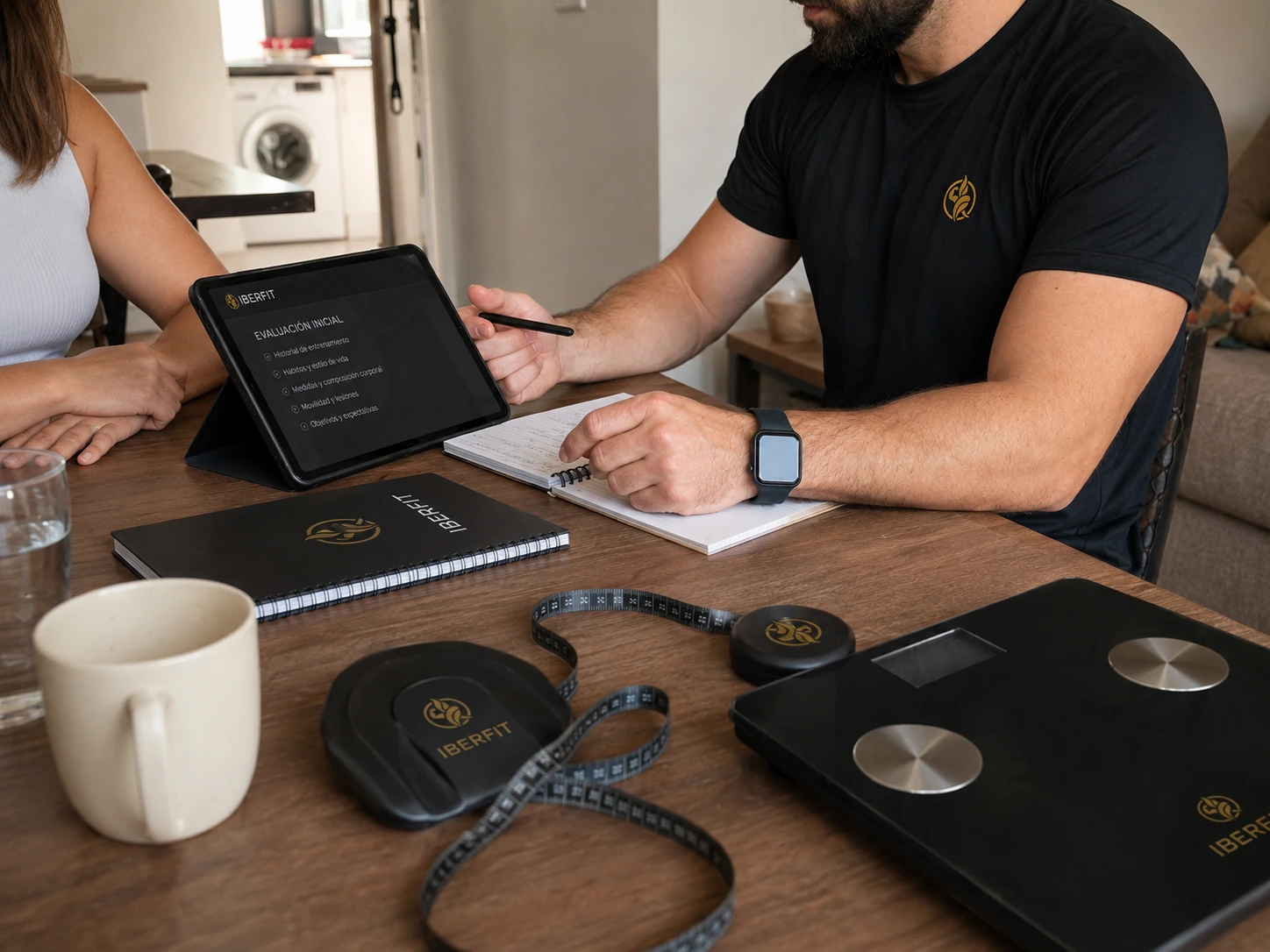
The initial assessment brings together context, body composition and physical capabilities. It is then interpreted with you and turned into practical priorities.
Bioimpedance provides indicative information and is interpreted alongside the rest of the assessment.
Goals, experience, availability, relevant background and training environment.
Useful measurements for establishing a baseline and reviewing change where appropriate.
Observation of relevant movement to support exercise selection and adaptation.
Pattern-based assessment to identify a functional baseline and development priorities.
Effort response and recovery using tests appropriate to the individual context.
The values shown are fictional and are included only to explain the report structure.
Illustrative values only. Final interpretation depends on measurement conditions, context and the full IRI assessment.
Improve movement quality before increasing training demand.
An individual plan reviewed and adjusted to your response.
At reassessment, IBERFIT compares only measures obtained with compatible protocols. If the protocol changes, the report states it and avoids presenting a misleading progression.
This fictional example shows how the IRI turns information into decisions. It does not represent a real person and is not a medical assessment.
Not everything can progress at once. The most relevant needs are prioritised.
Workload and exercise selection are matched to the starting point.
In-person, hybrid or online support is matched to need and context—not a template.
The IRI Assessment has value in its own right. If you then begin a monthly plan, the fee may be credited under the terms confirmed when booking.
BeforeLocation, availability and basic requirements are confirmed.
DuringThe assessment is adapted to current experience and capacity.
AfterYou receive a clear recommendation with no obligation to start a plan.
Request availability and receive the information needed to arrange the assessment.