
Assess
Understand the baseline and relevant constraints.
Your body, schedule and energy are not the same every week. Training needs to be able to respond to that.
That is why we do not follow a routine on autopilot: we observe, explain what we see and adjust with you when there is a reason.
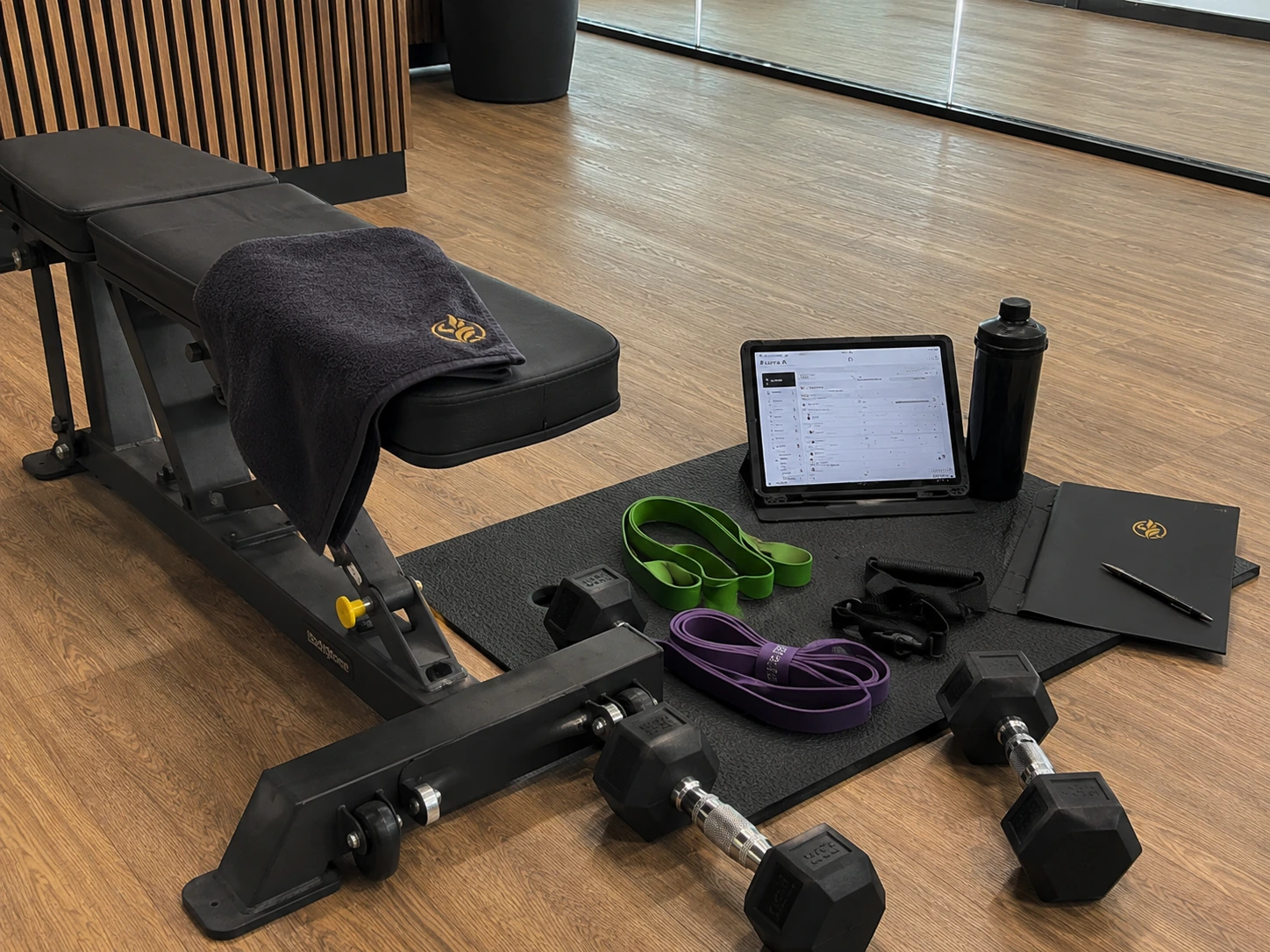
Each session starts with a clear purpose, uses the information that matters and creates a basis for the next decision.
Preparing the session and its follow-up is part of the service standard.
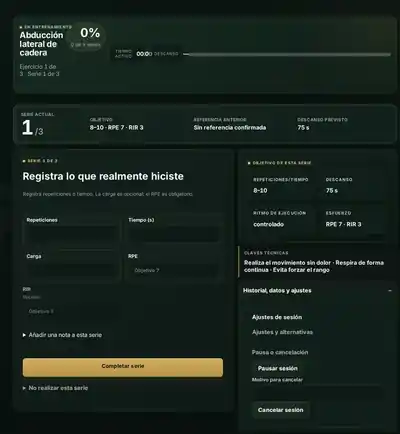
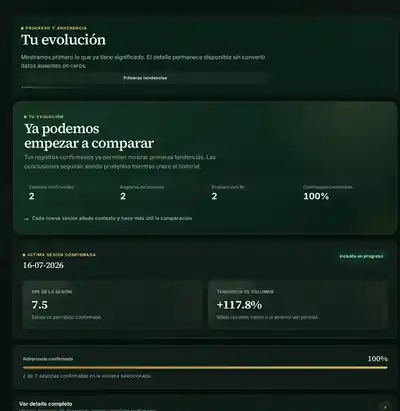
During a session we record what actually happened. At the end, we capture how it felt. During review, those signals help decide whether to maintain, progress or adapt.
Real IBERFIT app views · demonstration environment with synthetic data.

Understand the baseline and relevant constraints.
Define priorities, workload and progression.
Train with clear instructions and practical technique.
Record what is needed to interpret the response.
Compare progress, adherence and context.
Change the plan when there is a reason.
Individualisation begins with information—not a coach’s preference.
Structure protects quality; content responds to the individual.
Only information that can support interpretation or adjustment is recorded.
A plan is not repeated by default when the context has changed.
Technique remains consistent and recovery supports the plan.
Progression can move forward gradually.
Execution no longer matches the intended plan.
The exercise is paused, adapted or replaced and the reason is recorded.
Availability or recovery changes.
The workload is reorganised to protect continuity and quality.
Useful recordsSessions, responses and adjustments remain connected.
Shared standardsIBERFIT protects a consistent way to assess and review.
Professional responsibilityTools support the process; decisions remain human.
Pain, fatigue, a difficult week or faster progress than expected: the method is there to help decide what should happen next.
Assess, plan, execute, monitor, review and adjust. Each phase contributes information for the next decision so training does not depend on a fixed template.
When response, adherence or context provide a reason to change it. Good tolerance may support progression; pain, limitation or an unworkable week may require adaptation.
The priority is to stop, adapt or replace what no longer reflects the plan. The reason for the decision becomes part of the follow-up.
Only information that helps understand the response or make a decision. Collecting more data is not an objective in itself.
The working logic stays the same. In-person, hybrid and online all use assessment, planning, monitoring and review; the supervision and communication format changes.
These answers summarise the service described on this page. Operational detail and the final recommendation depend on each person’s context.
Tell us what you want to achieve and what is difficult right now. Structure is there to support you, not to force you into a template.